Internet Protocols
The TCP/IP and UDP
Network protocols are used to help us deliver a data packet from a source to the destionation, protocols are some standardized rules or methodologies that the internet follows to deliver the packets.
Network protocols matter so that we can realiably deliver the packets.
Data Format: How data is structured and organized.
Data exchange: How data is sent and received.
Timing and sequencing: When and in what order data is sent.
Error handling: How errors are detected and corrected.
Interperability: They allow devices from multiple manufacturers and running different Operating systems to work seamlessly such that the computer from one manufacture is able to communicate with the computer of other manufacturer.
Reliablity: The protocols are reliable to the connection and makes sure the data is transferred safely and securely
Security: The security is maintained in the transfer of the protocols as the data is shared
The OSI model
It is a 7 layered model where the differnet layer acts to server the other layers above and below each layer.
The OSI model will transform data coming in and going out in a manner that is more useable for the other layers and more efficinetly provide the experience that the user needs
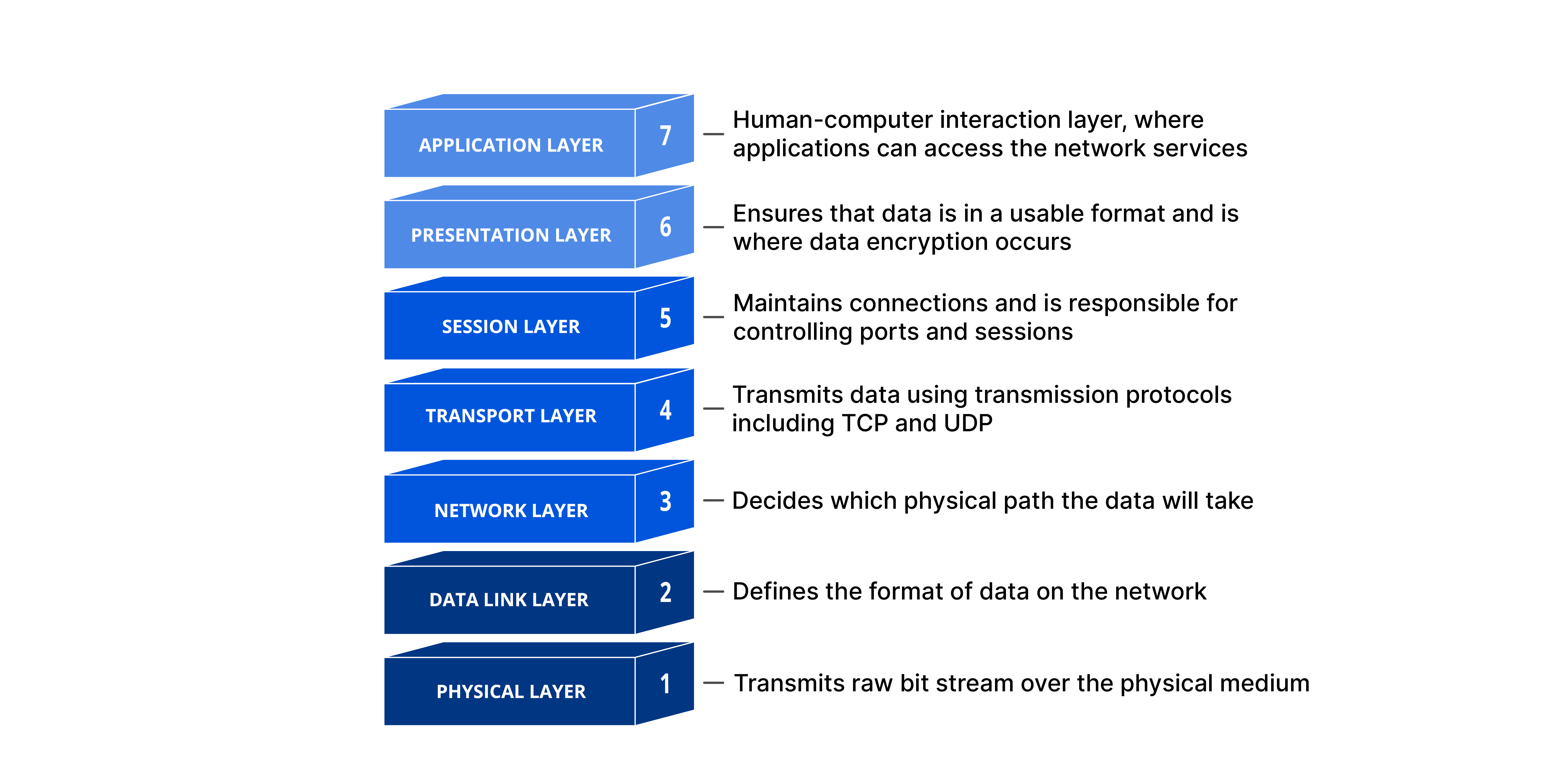
These 7 layers transfer the data generated from a computer base to the binaries of 0’s and 1’s and transfers to the medium of electrons or photon pulses, after which back to the Application layer so the user can complete the understanding of it.
The TCP/IP: The foundation of Internet Communication.
Its a 3 way handshake that is used for communication which provides the client and the server the assurance that the connection is established and transfer can take place.
The TCP/IP provides the fundamental rules for communication on the internet. IP handles addressing and routing, while TCP provides reliable, ordered delivery of data. They enable the seamless exchange of information across the global network.
Application Layer: An application (e.g., a web browser or a mobile device) wants to send data.
Transport Layer (TCP or UDP): The data is passed to the transport layer, which segments it into smaller packets. TCP adds headers for connection management, error control, and flow control. UDP adds minimal headers.
Network Layer (IP): The network layer adds IP headers to each packet, including the source and destination IP addresses.
Data Link Layer: The data link layer adds headers for physical addressing (MAC addresses) and transmits the data over the physical medium (e.g., Ethernet cable, Wi-Fi).
Physical Layer: The physical layer transmits the data as electrical signals, radio waves, or light pulses.